Precision Machining Quality Control Inspection Checklist with Report Excel Template
Original price was: ₹499.00.₹249.00Current price is: ₹249.00.
A professional Excel template for precision machining quality inspection and reporting. It helps record part details, inspection characteristics, tolerances, actual measurements, acceptance status, and remarks in a structured format. Useful for CNC shops, machine shops, QA teams, and manufacturers needing practical inspection control, traceability, and better reporting.
Description
What Is This Template?
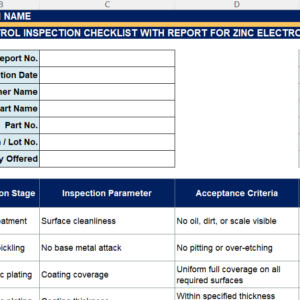
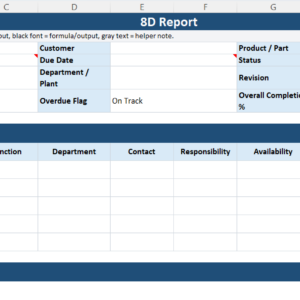
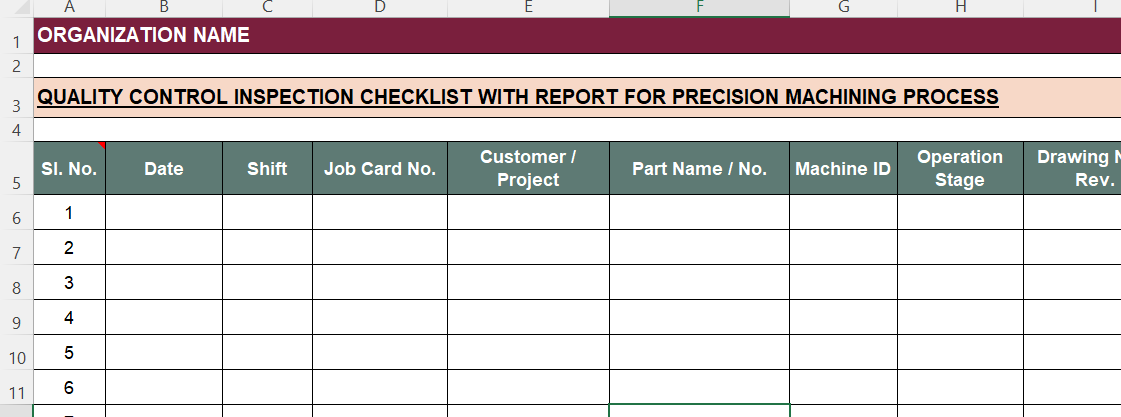
The above image is only a preview. This Precision Machining Quality Control Inspection Checklist with Report Excel Template helps teams inspect machined parts with clarity and discipline. It supports consistent quality checks during turning, milling, drilling, boring, grinding, tapping, and related machining work. Moreover, it combines inspection planning, result recording, and reporting in one practical workbook. Therefore, users can control variation, record acceptance decisions, and track inspection evidence without confusion.
This template suits precision machining environments where dimensions, tolerances, surface finish, thread quality, burr status, and visual condition matter daily. In addition, it helps users capture job details, batch data, machine information, instrument references, sampling results, inspection status, and remarks in a structured way. As a result, teams reduce missed checks and improve traceability. Furthermore, the format supports better discipline during in-process inspection, final inspection, and dispatch readiness checks.
Because this is a digital Excel template, users can start quickly. Also, dropdowns improve consistency. Likewise, formula-driven areas reduce manual mistakes. Therefore, the template feels practical, professional, and easy to use in real shopfloor conditions.
Why Is This Template Useful?
Precision machining demands repeatable inspection controls. Even a small deviation can create rejection, rework, delay, or customer complaint. Hence, a proper machining inspection checklist matters. This template helps quality teams verify critical checkpoints before problems move forward. Besides that, it creates a usable inspection report for review, action, and record retention.
The format helps users check part number, drawing reference, revision status, operation stage, inspection characteristics, specification values, actual readings, acceptance status, and inspector remarks. Similarly, it supports monitoring of measuring instruments, including micrometers, vernier calipers, bore gauges, dial indicators, height gauges, thread gauges, and surface finish tools. Consequently, inspection becomes more systematic and less dependent on memory.
Generic checklists often stay too basic. However, this template goes further. It supports real manufacturing use. It also includes data validation fields, structured reporting logic, and editable master values. Therefore, users get a cleaner workflow and better consistency across shifts, jobs, and inspectors. In the same way, supervisors can review outcomes faster. Thus, audit readiness improves. Also, internal control becomes stronger.
Who Can Use This Template?
This template works well for quality inspectors, QA engineers, QC supervisors, production engineers, manufacturing managers, machine shop owners, supplier quality teams, and internal auditors. Likewise, CNC machining units, tool rooms, aerospace component makers, automotive part manufacturers, medical component producers, industrial fabrication firms, and precision engineering workshops can use it effectively. In addition, small manufacturers and MSMEs can adopt it without complexity.
It also suits companies building ISO 9001 quality documentation and shopfloor control systems. Therefore, organizations that want better process discipline, inspection traceability, and objective evidence will find this template valuable. Moreover, training teams can use it to teach inspection recording practices to new quality staff.
This template adds value because it focuses on real inspection needs, not generic paperwork. It helps standardize how teams inspect machined parts. It also improves communication between production and quality. As a result, decision-making becomes quicker and more reliable. Furthermore, the report style supports customer-facing review when needed. So, users gain both internal control and external confidence.
If your work involves tolerance checks, dimensional verification, machining quality review, or inspection reporting, this template gives you a practical starting point. Accordingly, it saves setup time, improves documentation quality, and supports disciplined manufacturing control.