Warehousing Cleaning Procedure Template
Original price was: ₹499.00.₹249.00Current price is: ₹249.00.
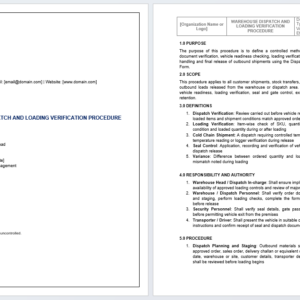
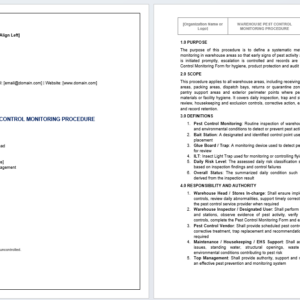
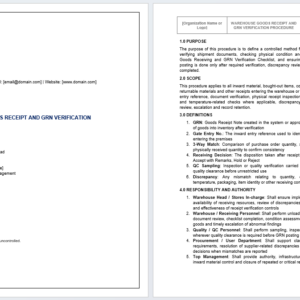
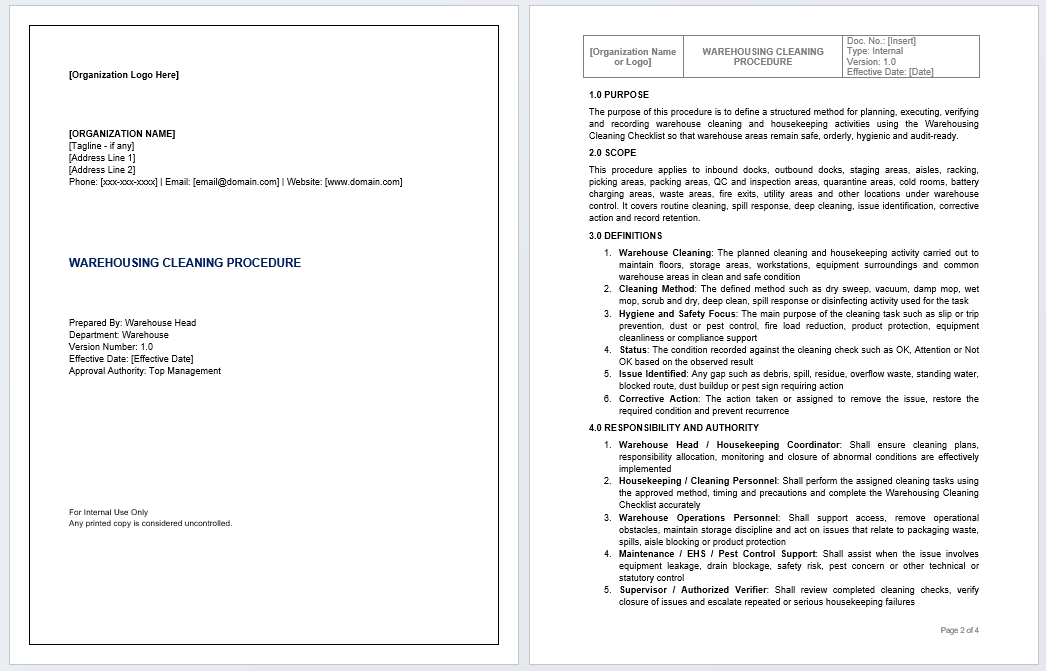
The above image is only a preview. This Warehousing Cleaning Procedure Template helps businesses standardize warehouse housekeeping, routine cleaning checks, issue identification, spill response, and corrective action follow-up. It is useful for warehouses, logistics hubs, factories, and distribution centers that need cleaner storage areas, safer movement paths, and more reliable cleaning documentation.
Description
What is this Warehousing Cleaning Procedure Template?
The above image is only a preview. This Warehousing Cleaning Procedure Template helps organizations maintain clean, orderly, and audit-ready warehouse conditions through a structured housekeeping process. It defines how cleaning is planned, how checks are performed, how issues are recorded, and how follow-up actions are controlled. Therefore, it supports safer and more disciplined warehouse operations.
Moreover, this template is designed for practical cleaning control across active warehouse areas. It covers docks, aisles, racks, packing zones, inspection areas, staging spaces, waste areas, utility corners, and related warehouse locations. As a result, users get a procedure that reflects day-to-day housekeeping needs rather than a vague general cleaning policy. In addition, it helps strengthen hygiene, visual order, and route safety.
Furthermore, the procedure is linked to the warehousing cleaning checklist. Thus, the document connects clearly with the operational format used to verify cleaning tasks, identify issues, and track corrective actions. Consequently, it becomes more useful than a generic SOP that lacks working checkpoints. This makes it suitable for warehouses that want cleaning control with practical evidence.
Besides that, poor warehouse housekeeping can cause slips, clutter, blocked aisles, dust buildup, packaging waste, pest concerns, and avoidable inspection findings. Hence, this template helps organizations define routine cleaning expectations and create better accountability for warehouse cleanliness. That adds operational value as well as audit value.
Who can use this template?
This template is useful for warehouses, factories, logistics hubs, distribution centers, packing facilities, spare parts stores, industrial stockrooms, and e-commerce fulfillment areas. Similarly, it suits businesses that want stronger cleaning routines, better visual order, and more dependable housekeeping records. Therefore, it is relevant across many warehouse-intensive industries.
Warehouse heads can use it to standardize cleaning control. Housekeeping teams can use it to perform assigned tasks correctly. Supervisors can use it to verify condition and review issues. EHS teams can use it where cleanliness affects safety and route clearance. Likewise, pest control or maintenance teams can use it where cleaning findings connect with leaks, waste, or contamination risks.
In addition, this template is useful for training, warehouse audits, ISO documentation, housekeeping reviews, and operational improvement projects. Consultants, auditors, and business owners can also use it while building structured cleaning systems in warehouses. Therefore, it serves both routine operations and formal management controls.
Why is this template useful?
This template adds value because it goes beyond simple cleaning instructions. It helps define areas, methods, safety focus, issue identification, corrective action, verification, and record retention. As a result, warehouse cleaning becomes a controlled process rather than an informal activity.
Moreover, it supports safety and product protection together. Clean aisles, controlled waste, reduced dust, and prompt spill response improve both working conditions and storage reliability. Therefore, the benefits reach operations, EHS, and audit readiness at the same time. Furthermore, the procedure helps connect housekeeping with pest control, maintenance, and warehouse discipline.
Additionally, the template improves accountability. It allows supervisors to identify recurring weak areas and assign follow-up actions. Consequently, cleaning performance can improve over time instead of depending only on reminders. Also, the editable format helps users customize zones, timing, responsible roles, and internal references.
Most importantly, this template gives warehouse teams a practical and professional method for managing cleaning activities. It helps create better order, safer movement, and clearer documentation. Therefore, it is a useful template for organizations that want dependable warehousing housekeeping control.